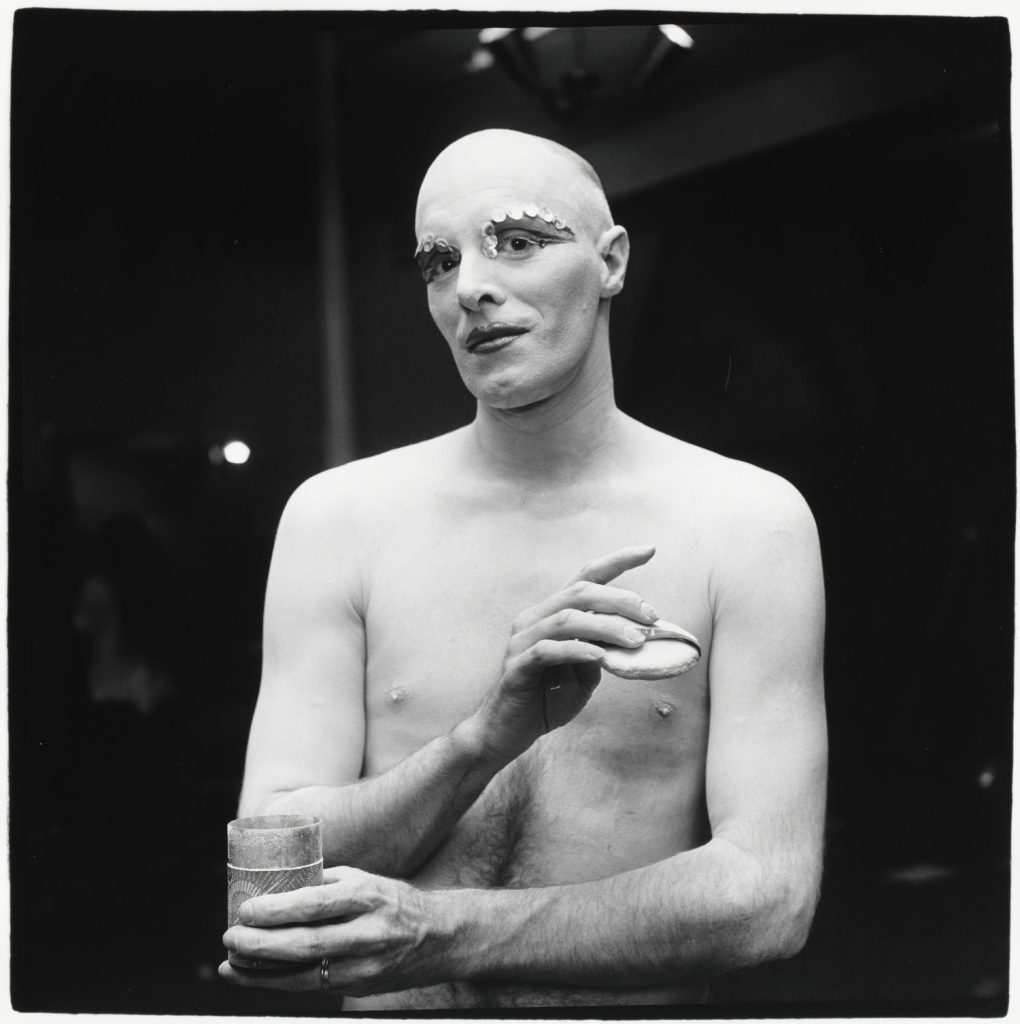
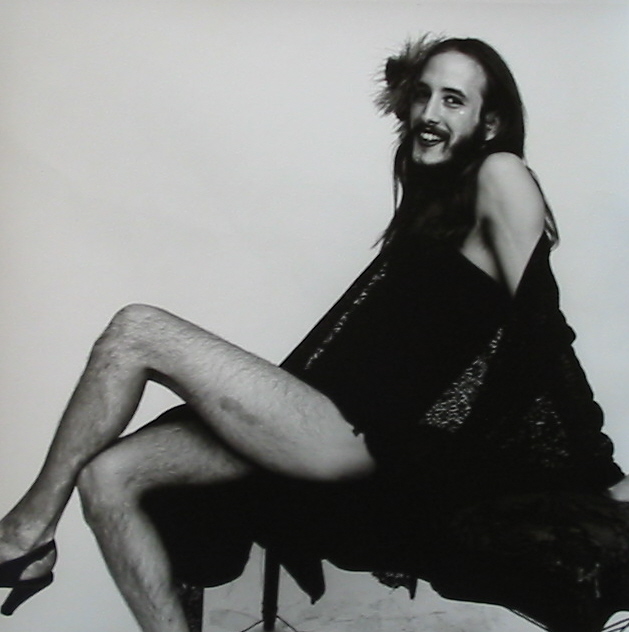
Peter Hujar, Ethyl Eichelberger and Agosto Machado, “Ruth Ruth,” 1984.Vintage gelatin silver print. Courtesy Maureen Paley, London.
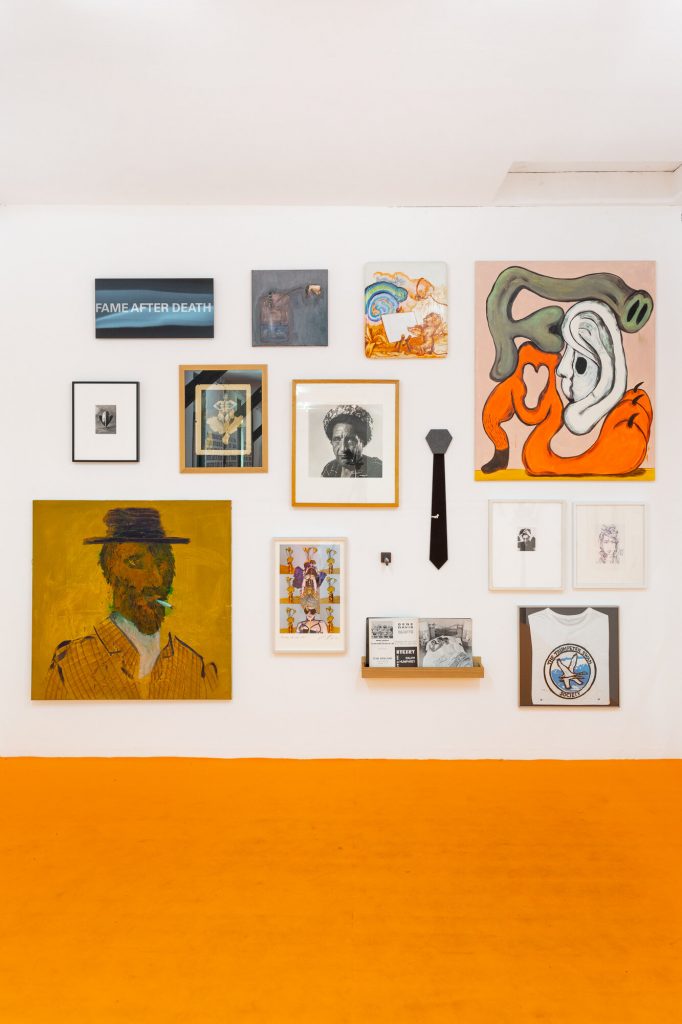
Maureen Paley is pleased to host Gordon Robichaux for Condo London 2026 with an exhibition of recent work by Agosto Machado at Studio M. For his London debut he will present a group of his shrines and altars alongside related ephemera and works by Sheyla Baykal, Caroline Goe, Peter Hujar, and Jack Smith.
Ethyl Eichelberger ‘Untitled (Mechanical paste-up)’ 1981, unique Peter Hujar gelatin silver print, pen, tape on paper. Courtesy Gordon Robichaux, New York via Instagram.
Agosto Machado is a Chinese-Spanish-Filipino-American performance artist, activist, archivist, muse, caretaker, and friend to countless celebrated and underground visual and performing artists. He has been a vital participant and witness to cultural and creative life in New York since the early sixties, from art, theater, performance, and film to social and political counterculture and the dawn of the gay liberation movement. As part of a cohort of queer revolutionaries, including Marsha P. Johnson, Thomas Lanigan-Schmidt, and Sylvia Rivera, Machado participated in the Stonewall Rebellion.
“In 1973, I travelled with La MaMa Experimental Theatre Club, founded by Ellen Stewart, to the Holland Festival (now called the Amsterdam International Festival). I had come into experimental theatre through my friendships with downtown New York figures like Jackie Curtis and Jack Smith, and La MaMa had become a refuge for me. After our performances, the company took a break. Some went on to Paris, I stayed in England for three weeks. I made London my base and took trips out to Cambridge, Hampton Court Palace, and Stonehenge, moving through the country mostly by the Underground and regional trains.
Stonehenge at that time, was completely open. There were no barriers, no guards keeping people at a distance. You could climb the stones, children ran and played among them, and people picked up small fragments as souvenirs. For me though, it felt like a pilgrimage. Standing there, touching those ancient stones, I felt a sense of spiritual reflection, something deeply personal being in the presence of one of the great wonders of the world.
As I moved through London and beyond, I was also watching the cultural shifts post Stonewall. Queer visibility was becoming more present in public life. Fashion and popular music were loosening the rules, opening up space for fluid gender and sexual identities. There was a feeling in the air, a new freedom, and traveling around London during that time, I felt myself very much a part of it.” – Agosto Machado, 2025.
Machado has presented two solo exhibitions at Gordon Robichaux in New York (2025 and 2022). His shrine and altar sculptures are held in the collections of The Museum of Modern Art (MoMA), the Whitney Museum of American Art, and the Hessel Museum of Art at Bard College in New York.
New York–based gallery Ortuzar will now jointly represent the Peter Hujar Archive and Foundation with Fraenkel Gallery in San Francisco. The archive will continue to collaborate with Mai 36 Galerie in Zürich and Maureen Paley in London on select projects.
The news also means that the Hujar Archive will depart its longtime representative, Pace Gallery, which last mounted a solo show for Hujar at its 125 Newbury location in Tribeca in September 2023. The late artist’s archive had been represented by Pace/MacGill, a separate photography-focused gallery that was merged into Pace in 2020, since 2013.
Ales Ortuzar, the gallery’s founder, said he still recalls the first time he saw Hujar’s work nearly two decades ago, when Maureen Paley mounted an exhibition of the artist in London in 2008. “It’s work that has lived with me ever since—in my consciousness,” he said. “I’ve really cared deeply about it.”
He added, “Without sounding cheesy, it’s one of these situations where one has to sort of pinch oneself in excitement because Hujar is an artist I’ve cared about deeply for so long, and it’s a joy to welcome the archive into the gallery.”
The representation deal with Hujar’s archive and foundation, Ortuzar said, “happened in a very natural way. The estate got in touch with us, and we realized we had a lot of shared values. They had seen the work that we’ve done with certain artists in the States, from Joey Terrill to Suzanne Jackson.”
Hujar’s work has recently had a resurgence. Filmmaker Ira Sachs directed a 2025 biopic on the artist, with Ben Whishaw playing Hujar, and Liveright reissued his 1967 book Portraits in Life and Death, which established Hujar as one of the top talents of his generation. This year, the Morgan Library and Museum will open “Hujar: Contact,” focusing on its holdings of over 5,700 of the artist’s contact sheets, while the Gropius Bau will mount an exhibition, curated by Eva Respini, pairing Hujar’s work with that of Liz Deschenes.
Last year also saw his work feature in multiple high-profile museum exhibitions, like “Queer Histories” at the Museu de Arte de São Paulo and “Susan Sontag: Seeing and being seen” at the Kunsthalle Bonn in Germany. Recent solo exhibitions include ones at Raven Row in London (2025), the Art Institute of Chicago (2023), and a collateral event to the 2024 Venice Biennale.
In an Art in America article reflecting on Hujar’s resurrection, art historian Jackson Davidow wrote, “[Hujar] is increasingly becoming a figure of pop art history, a fascinating case study in photographic subjectivity and identity from an era when the New York photography, art, and queer worlds had forged fraught yet flirtatious relationships.”
Ortuzar will mount its two concurrent exhibitions for Hujar this spring. The first, titled “The Gracie Mansion Show Revisited,” will re-create a Hujar exhibition mounted at the East Village gallery Gracie Mansion in 1986, a year before his death from AIDS-related complications. An iteration of that exhibition was mounted by Fraenkel Gallery last fall, and Ortuzar said the upcoming 40th anniversary of the now iconic exhibition prompted him to bring it back to New York.
The second will be a group exhibition focusing on artists of Hujar’s circle, curated by critic Andrew Durbin, who in April will publish The Wonderful World That Almost Was: A Life of Peter Hujar and Paul Thek, about the two artists’ decadeslong relationship. The exhibition, Ortuzar said, is “really explaining and reexplaining Peter and his context, his world, and his influence for a new generation of people who are new to the work who might not understand the context out of which this work evolved. That’s what we want to show.”
The actor reunites with director Ira Sachs on a new, experimental biopic about the iconic photographer. Here, they discuss why his work still resonates today
Published January 5, 2026 in Dazed. Text by Nick Chen
Peter Hujar’s Day (Film Still) Courtesy Janus Films
Ben Whishaw is a notoriously private person. Nevertheless, I’ve started our interview by asking the 45-year-old British actor how he got out of bed the previous day. “Yesterday, I woke up at around 7:30, but I knew I wanted more sleep,” says Whishaw. “I had a sense of excitement, because I’d had a really busy few days leading up to that morning, and I was like, ‘Ah, I don’t have to be anywhere.’ I turned over and lay in the dark for another half an hour. I got up and made myself a coffee. I didn’t have any breakfast. Maybe a handful of nuts.”
It’s a Thursday afternoon, on December 4, 2025, when I meet Whishaw and the 60-year-old American director Ira Sachs at the Londoner Hotel. Their latest collaboration after 2023’s Passages is Peter Hujar’s Day, a genre-defying film that’s neither documentary nor fiction. On December 19, 1974, the celebrated queer photographer Peter Hujar described his previous day in great detail to Linda Rosenkrantz, a writer who recorded and transcribed their conversation. With Whishaw and Rebecca Hall as the leads, Sachs’ film recreates that day’s events – not the day described, but the describing itself.
The result is hypnotic and deceptively simple: for 70 minutes, it’s a dialogue that focuses on the photographer’s previous day and nothing else. The action, if you can call it that, never leaves Rosenkrantz’s New York flat, except for smoke breaks on the balcony. It’s full of tantalising contradictions: a wordy, stagey piece that’s cinematic through grainy cinematography and avant-garde cutaways; an immersive, grounded drama that’s so Brechtian it ends on an applause break.
“It’s important to state emphatically that I had no mission to introduce people to Peter Hujar,” says Sachs. “It’s really about two actors on a set who are transmitting this conversation between Peter and Linda.” But it’s a happy accident if viewers discover Hujar’s work? “I like that you’re pushing back, even though I say that wasn’t my intention. On no level would I not want people to discover his work, because his work is a gift, particularly to queer people.”
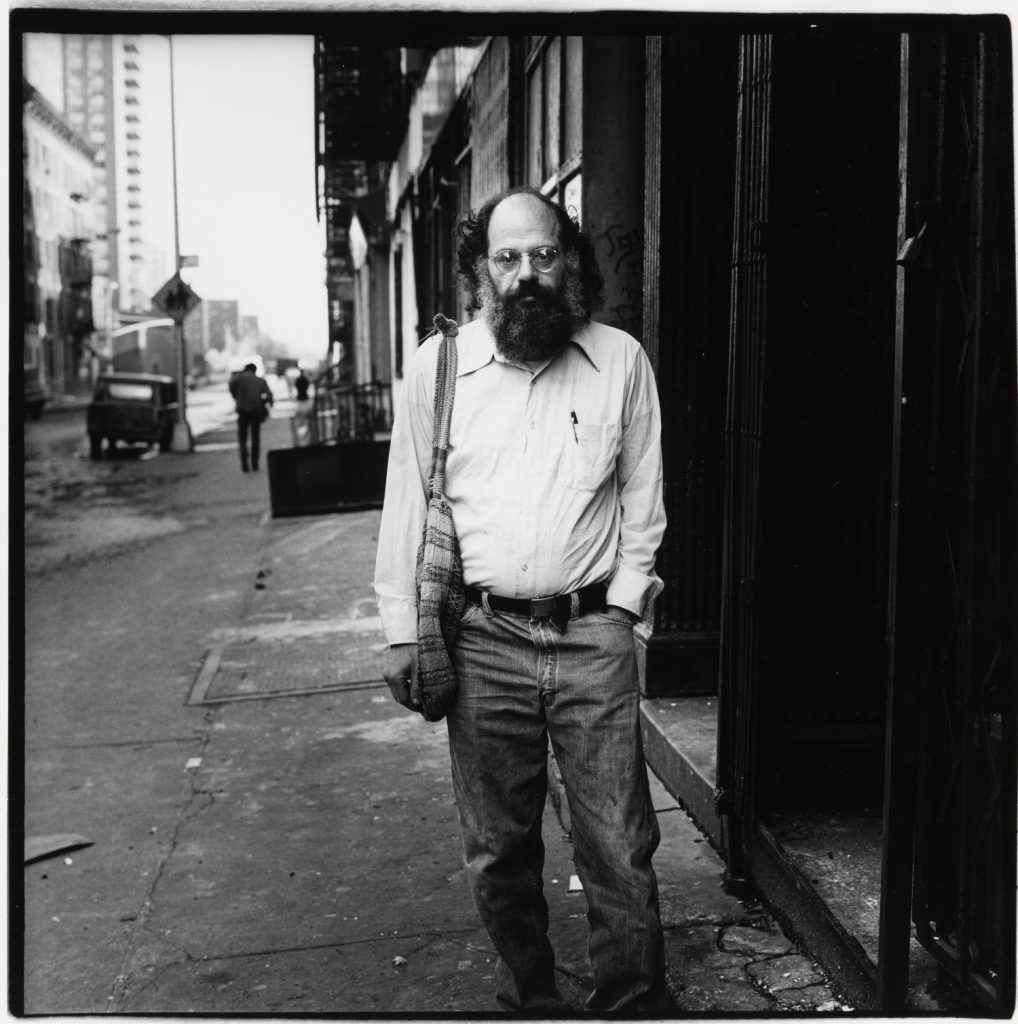
In 1974, Hujar is 40 years old and ascending in his career. His previous day involves talking to Susan Sontag on the phone, and photographing Allen Ginsberg for the New York Times; he name-drops acquaintances like Fran Lebowitz, William S. Burroughs and Ed Baynard. He frets his day is “boring”, yet his account, including the ordering of Chinese food, is engrossing. It’s ultimately Hujar’s inquisitive energy, not his photography, that’s on display.
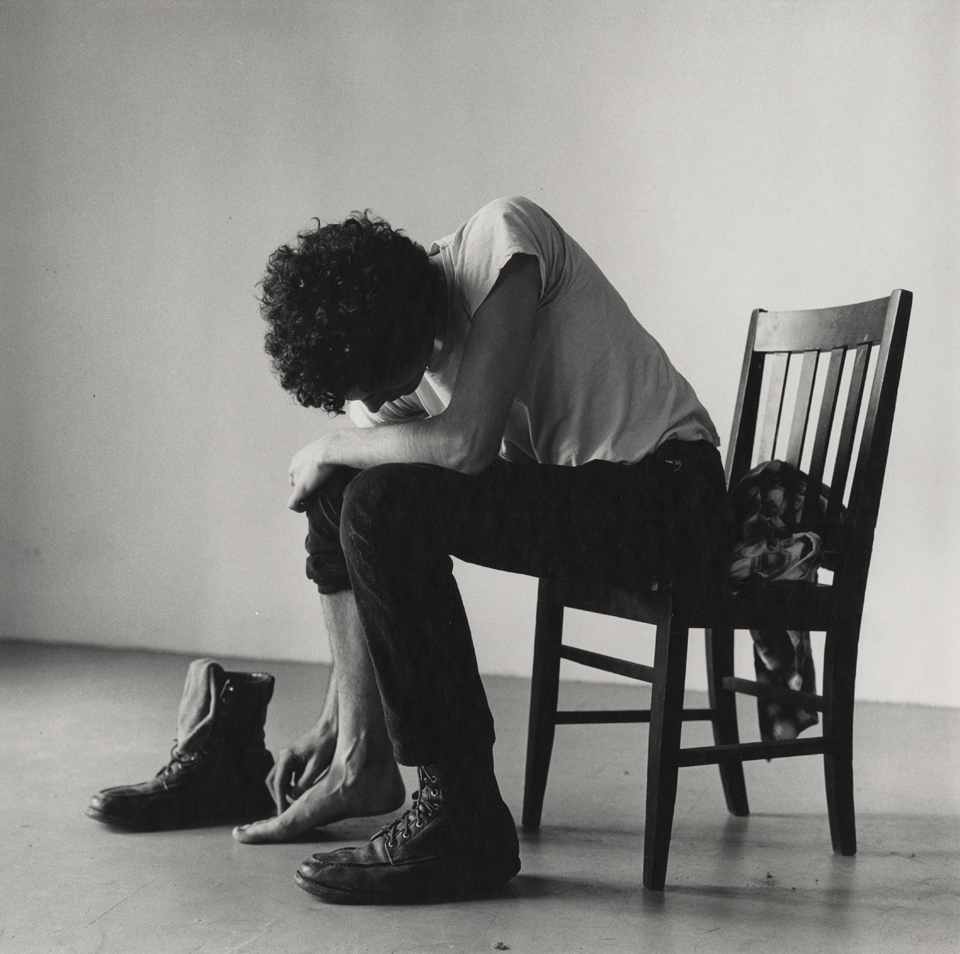
Sachs and Whishaw are avowed fans, the latter owning a 1980 self-portrait called “Seated Self-Portrait Depressed” in his home. “His art will always be as if it was made today,” says Whishaw. “It feels alive. He managed to catch an intimacy with people – actually, not just people, but frequently animals as well – where he could get them to be so open to him. When I try to take photos, that exchange is difficult, because lots of people understandably don’t want to be photographed. It’s quite an aggressive act, photographing someone. You’re sort of taking something from them. To encourage someone to feel relaxed, open, and able to be intimate – that was his great genius. And it’s what he saw in people as well.”
Sachs discovered the transcript in a gay book shop in France during the shooting of Passages. By then, the ums and ahs had already been removed. “The transcript is quite musical, exact and verbatim,” says Sachs. “I’m certain when Linda typed it up 51 years ago, she removed several ums. But she did not remove the natural inflexion of how people talk in conversation.”
“I had an impulse to make it more, ‘Oh, let me just find this word or phrase,’” says Whishaw. “But Ira kept saying, ‘Just keep talking.’ It had to have a certain amount of tension in it. It couldn’t just become soggy, meandering language.”
Hujar died in 1987, aged 53, from Aids. Throughout the film, Hujar agonises about his health and mortality; Rosenkrantz pleads for him to eat more vegetables. When Hujar describes closing his eyes and going to sleep, there’s a poetic finality to the statement.
“It’s a kind of literary device,” says Sachs. “We know more than the character, and that his life will end in 13 years.” But he’s agreed to be documented, and is preserving his legacy? “Yeah, but he’s really un-self-conscious, which I admire. His lack of defensiveness and trust in Linda is quite deep. It’s something I could never experience with my own therapist – he seems to totally trust that she’s going to be interested in anything he says.”
Peter Hujar’s Day (Film Still) Courtesy Janus Films
Hujar:Contact offers an unprecedented look into the life, times, and creative evolution of a master photographer. The exhibition features more than 110 contact sheets and 20 enlargements from the Morgan’s Peter Hujar Collection, which includes over 5,700 contact sheets from throughout the artist’s career.
Peter Hujar (1934–1987) began filing contact sheets and assigning them job numbers at age twenty-one. His records make it possible to track his development—from two decades as a studio assistant (1955–67), when he pushed himself to try work of every kind, into the late 1960s and his work as a freelancer in fashion, music, and advertising, through his mature period (1974–87) as a fiercely independent and influential artist in the East Village.
Many of the contact sheets bear editing marks that indicate ideas about cropping and printing and contextualize the exposures Hujar ultimately decided to enlarge. The intense, interactive quality of his portrait work comes to life in contact sheets that read as intimate pictorial narratives, revealing the nature of his attention and the unique personality of each of his subjects. As Hujar matures and struggles, and as the character of his social world changes from the 1950s through the 1960s, 1970s, and 1980s, his contact sheets tell the nuanced story of a lifetime, a community, and an era.
Organized by Joel Smith, Richard L. Menschel Curator and Department Head of Photography.
Birth and death, sex and nature, and much more in this extraordinary exhibition of Peter Hujar’s photography
Peter Hujar — Eyes Open in the Dark
It sometimes feels like few in the art world care about beauty. Their hearts have hardened, their spirits are weak. For many, art is simply a vehicle for social change rather than a source of aesthetic bliss. So when an exhibition comes along that is devastatingly beautiful—in all its abject, tender, and spiritual forms—it is all the more shocking.
Peter Hujar’s pictures are alive. The prints—both Hujar’s originals and the recent ones by co-curator Gary Schneider—possess a powerful aura that allows them to transcend their time while also being essential documents of the era. I am even tempted to make a pilgrimage to Bonn next year to see the show a third time.
Read my interview with the exhibition’s co-curator, and Peter Hujar’s biographer, John Douglas Millar.
…
The paradox of memorability is that almost anything can stick in the mind if you dedicate enough attention. Even the act of photographing an event helps solidify it in one’s mental archive. It is no coincidence that half of the things I’ve listed here were ones I documented. So be it. What we pay attention to is what makes up a life. Here’s to more memorable cultural experiences in 2026.
From Peter Hujar’s indelible portraits of 1970s counterculture to Sophy Rickett’s Pissing Women of the 1980s, here are 10 of the most timeless and inspirational photo series published on Dazed last year
Cookie Mueller. Image courtesy of the Estate of David Armstrong
This shortlist encompasses the most inspirational photography stories by some of the most revered image-makers we’ve published on Dazed this year. From Kikuji Kawada’s visions of Hiroshima to Daniel Arnold’s gaze on New York in the anarchic present, they span many decades, yet all share a timeless quality.
Peter Hujar’s portraits from the late 1960s through to he early 1980s testify to the fact that great art can remain as resonant and meaningful as ever, while Yorgos Lanthimos’s 2024 series of images possesses a timeless, haunting quality that makes it hard to pin down to a particular decade.
What is equally apparent is how artists’ fierce connections to their subjects powerfully draw us in. There are Linder’s humorous but pointedly critical collages, the revival of Sophy Rickett’s thrilling and defiant Pissing Women, a glimpse into the 90s by way of Davide Sorrenti’s era-defining sketches and Polaroids, and David Armstrong’s indelible portraits of friends Nan Goldin, Cookie Mueller – none of which have dimmed one bit despite the passing of time.
The past is potent. It makes our turbulent reality feel part of a wider narrative. Seeing artists who’ve gone before us representing beauty and hard times alike, we’re reassured that inevitably the pendulum will swing back again. The world is heavy, but those who channel that fact into memorable aesthetics and worthwhile chronicles give us a sense of hope we so badly need. Enjoy.
Despite not having been recognised in his lifetime, this year seems to have been a landmark year in the legacy of Peter Hujar. His life is the subject of a new film, Peter Hujar’s Day, a biographical drama starring Ben Whishaw, written and directed by Ira Sachs; a new photo book, Stay Away From Nothing, about his relationship with Paul Theck was released by Primary Information; and the year opened with a major exhibition, Eyes Open in the Dark, at London’s Raven Row. Fran Lebowitz to Divine and Peter Wojnarowicz, the depth and weight of his portraits of New York’s outré figures and downtown art world figures still resonate as powerfully today as ever.
Raven Row, London One of the great photographers of the late 20th century, and now the subject of Ira Sachs’s 2025 movie Peter Hujar’s Day starring Ben Whishaw, Peter Hujar’s relentless, beautifully shot black-and-white photographs filled Raven Row early this year. This revelatory show brought out Hujar’s curiosity and his unerring eye, his darkroom skills and his utter seriousness. Rolleiflex camera always in hand, Hujar captured human vulnerabilities and vanities, including his own, a prickly artist, shunning fame. New York wreathed in fog, light on the river, life and death: his subjects had no end. My show of the year.
…
Charlotte Jansen’s best UK photography shows of the year
Raven Row, London Putrid, petrifying, and vertiginously beautiful, this museum-quality exhibition threw you into the decaying, dank urban streets of downtown New York, but also lifted you to moments of dizzying euphoria and perfect grace. A sharp, feeling, and sublime account of one of the 20th century’s greatest artists. Unforgettable.
The highly acclaimed show at Raven Row, London, is traveling to the Bundeskunsthalle in Bonn, Germany! The Bundeskunsthalle begins its 2026 exhibition year with an exhibition on one of New York’s most important photographers, Peter Hujar, who was celebrated for the empathy and warmth of his images, yet was little known during his lifetime. Hujar’s primary interest was portrait photography, photographing himself, his friends, and residents of New York’s downtown queer scene, but he also turned his attention to animals, architecture, and landscapes.
The exhibition was organized by Raven Row, London, and the Peter Hujar Foundation. In partnership with the Bundeskunsthalle, the Gropius Bau, Berlin, presents Peter Hujar / Liz Deschenes: Persistence of Vision from March 19 to June 28, 2026.
Celebrating more than 30 years of collection, Fragile Beauty: Photographs from the Collection of Sir Elton John and David Furnish pays tribute to the passion of Sir Elton John and David Furnish for photography reflecting both their personal taste and unique look as collectors. Selected from their collection of more than 7000 images, the photographs presented are iconic images that explore the connection between the force and vulnerability inherent in the human condition.
Recounting a history of modern and contemporary photography, the exhibition will bring together an exceptional selection of the world’s most important photographers with works dating back to the present day from 1950. Adapted from the exhibition presented at the Victoria and Albert Museum between May 2024 and January 2025, the course will explore, through five thematic sections, topics such as desire, fashion, celebrities and photojournalism. Artists featured include Robert Mapplethorpe, Harley Weir, Irving Penn, Diane Arbus, Ai Weiwei, Herbert List, and many others, as well as a monumental installation of 149 Nan Goldin prints from his Thanksgiving series.
Commissioners: Duncan Forbes, Newell Harbin and Lydia Caston. Exhibition produced by the Victoria and Albert Museum.
Bringing together the works of Peter Hujar and Liz Deschenes, Persistence of Vision opens an intergenerational dialogue on photography. Working in New York City between the Stonewall uprising of 1969 and the onset of the AIDS crisis in the 1980s, Peter Hujar captured a pivotal cultural moment in piercing black-and-white photographs. Alongside incisive images of animals, nature and urban ruins, he portrayed New York’s downtown avant-garde and queer communities, including figures such as Candy Darling, Susan Sontag and David Wojnarowicz. In the exhibition, Hujar’s photographs are interspersed with contemporary works by New York City-based artist Liz Deschenes. These interludes invite viewers to pause, slow down and consider Hujar’s work in a new light. Deschenes creates sculptures and non-representational photographic works that employ the fundamental properties of the medium – light, chemistry and time – to explore what a photograph can be. As the first major exhibition of both Hujar’s and Deschenes’ work in Berlin, Persistence of Vision proposes an expansive understanding of photography and highlights the uncompromising clarity of vision that defines both artists’ practices.
Curated by Eva Respini, Co-CEO and Curator at Large, Vancouver Art Gallery, with Monique Machicao y Priemer Ferrufino, Curatorial Fellow Exhibitions, Gropius Bau
In partnership with Gropius Bau, the Bundeskunsthalle in Bonn presents Peter Hujar. Eyes Open in the Dark from 27 February to 23 August 2026.
Stay away from nothing shines a spotlight on the deep relationship between Paul Thek and Peter Hujar through the artists’ letters and photographs. Beginning in 1956 and spanning two decades, the publication opens a window into their intimate, complex, and beautiful lives, starting with a sequence of images by Hujar that showcases the two of them in innocent moments of pensive and haunting play in Coral Gables and beyond.
Ben Whishaw and Rebecca Hall in Peter Hujar’s Day (2025), directed by Ira Sachs. Photo courtesy of Janus Films.
In all, Peter Hujar lived a brief 19,401 days. For most of those days, his unblinking eye was alive to the world. Countless more days, he spent capturing people and places in images of intense depth and beauty. But only one of those days has been documented with exquisite clarity.
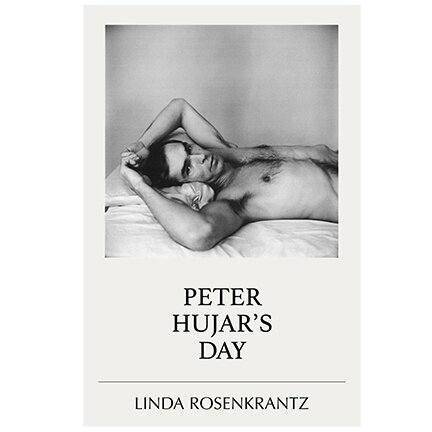
In the winter of 1974, Hujar visited his friend Linda Rosenkrantz’s apartment. At her request, he had made notes about what he did the day before—December 18, a Wednesday—and began relating it to her. His account was to be included in the writer’s new project documenting how various people remembered a day in their life (Chuck Close was another interviewee). The photographer spared no detail as he told Rosenkrantz what he did, who he met, what he ate, how he felt, what he wore, and how many naps he took. “I didn’t do anything,” he admits at one point. His narrative begs to differ.
That one day now forms the heart of Peter Hujar’s Day, a new film by director Ira Sachs, hot off his 2023 movie Passages. Sachs, however, has not recreated Hujar’s day scene for scene, but rather, the retelling of his day—essentially the very long conversation between Hujar and Rosenkrantz, played by Ben Whishaw and Rebecca Hall. What compelled the filmmaker was the rapport and shared language that transpired in the pair’s dialogue, as much as its content.
“All I ever want is intimacy and authenticity,” Sachs told me over a video call. “It’s all there.”
Ben Whishaw and Rebecca Hall in Peter Hujar’s Day (2025), directed by Ira Sachs. Photo courtesy of Janus Films.
Rosenkrantz’s broader day-in-the-life project was never realized. The original transcript of her interview with Hujar was donated in 2019 to New York’s Morgan Library and Museum, home to a large repository of the photographer’s work. In 2021, it was published by Magic Hour Press in a compact volume, which Sachs encountered in a gay bookstore while filming Passages in Paris.
In the book, the director, who admits to owning “almost every Hujar monograph,” saw a new picture of Hujar emerge. He also saw his next project, one that was small but revealing, contained yet vast.
“I wasn’t interested in making a film about Peter Hujar. I was interested in the text that Linda Rosenkrantz created about this afternoon she had with Peter Hujar—this conversation between two friends that had been reclaimed,” he explained, adding of its cosy scale: “I embrace the magnitude of the minimal.”
The Day After Peter Hujar’s Day
While Rosenkrantz’s text effectively served as a readymade script (with some light tinkering from Sachs), translating it into a visual, temporal medium called for considerations of set and setting. Sachs first thought to film Peter and Linda’s conversation in real-time before abandoning the idea as it seemed too static: “This was setting myself up for a catastrophe,” he thought.
He almost scrapped the entire project six weeks out from shooting until he checked out Jim McBride’s 1969 documentary My Girlfriend’s Wedding. That film centers solely on McBride’s then-lover Clarissa Ainley confessing to the camera her reasons for marrying another man. The cuts in that movie, Sachs said, were much like those in Andy Warhol’sPoor Little Rich Girl (1965), representing jumps in time and location, much like an ellipse.
“The ellipse becomes the nature of movement,” he said. “The ellipse gave me permission to adjust my understanding of the film to one that would abstractly move through time, based on decisions I made as a filmmaker.”
Ira Sachs. Photo: Jeong Park.
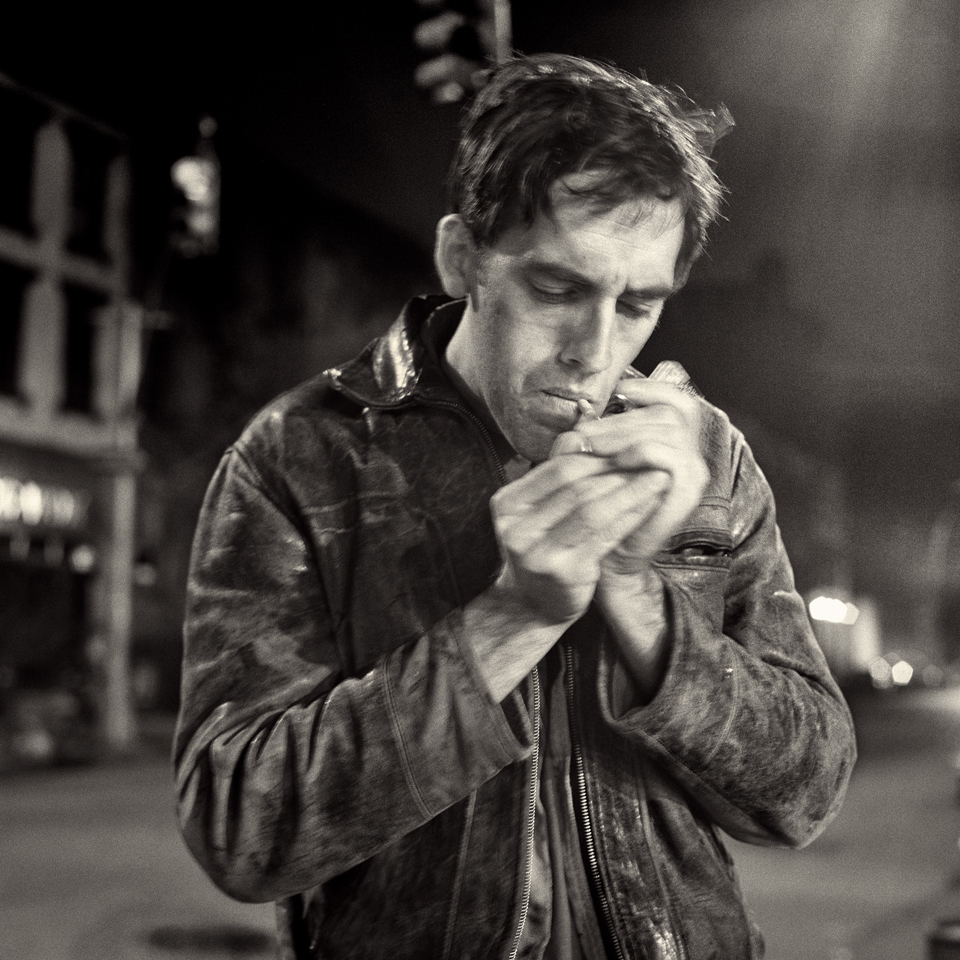
In Peter Hujar’s Day, we see Peter and Linda converse in her living room, her kitchen, her terrace, and her bed—all of it shot on 16mm film at a split-level apartment at Westbeth Artists Housing. The change in locations marks the passage of time, but so do their movements. Linda boils water to brew tea; Peter lights a cigarette then later, retrieves a new pack from his coat hanging by the door. They’re gestures that inject dynamism into the scenes, forming an almost choreographed dance to background the conversation. In a way, Sachs said, it’s almost “an action film.”
But, he added, it’s also “a film that’s a sequence of portraits of subjects in space and in light.”
Whishaw and Hall’s portrayals are lived-in ones; their back-and-forth belying an easy camaraderie. While Whishaw took to ingesting 55 pages worth of dialogue that exemplified what he called Hujar’s “obsessiveness,” Hall turned to the real-life Rosenkrantz, now 91, to nail her open-heartedness and clear love for the artist. “When I spoke to Linda, it was just so apparent how much she adored him,” Hall said in production notes. “And looking at photographs of the two of them from the time, you could see the intimacy there.” (Sachs called Rosenkrantz a “fairy godmother” to the film.)
Rebecca Hall in Peter Hujar’s Day (2025), directed by Ira Sachs. Photo courtesy of Janus Films.
The Person Behind the Camera
What surfaces during the course of Hujar and Rosenkrantz’s exchange, of course, are more than the banal details of his one day. “The things that happen over the course of this day are quite small things,” Whishaw reflected in production notes, “but they nonetheless speak somehow about who he was.”
…
Hujar’s warmth toward his friend shows up (Rosenkrantz, in turn, worries about his eating and smoking habits), as does his unsurprising ability to color in a scene. His dry humor crackles. At one point, he complains at length about Ed Baynard, an artist he calls “totally insane,” who is prone to tying him up on the phone. He tells Rosenkrantz of her project, “If this ever gets printed, I hope it’s printed with his name.”
“Anything that adds to Peter’s reputation as an important photographer gives me pleasure,” Rosenkrantz said in production notes. “Peter died penniless and only known among a certain group of people. I think that hearing his voice, so to speak, in the book and in the film really tells people who he was.”
Sachs himself discovered Hujar in the late ’80s, via a show at Matthew Marks gallery (the director doesn’t own a work by Hujar, he said, but Whishaw does). To him, Hujar creates portraits the same way the author Henry James crafts his novels. “They have that depth and narrative quality. They’re technically exquisite,” he explained. “They bring majesty to a subculture that I feel connected to and I want more of. They make major the marginalized in a way that gives me strength.”
That ethos is borne out in Sachs’s own work—from his intimate portrayal of domestic tensions in Little Men (2016) to Keep the Lights On (2012) and Passages, which fix a humanistic lens on the queer experience. His immersion in Hujar’s oeuvre is such that, he said, “I think Peter and a whole group of artists from the East Village have become my ancestors. I live in relationship with them and I make work in relationship with them.”
Seeing the other side of the camera in Peter Hujar’s Day and glimpsing the photographer behind the photograph—even, and especially, with all his raw edges—struck another, deep chord.
“The gift of this text is how much Peter reveals his vulnerabilities as an artist,” he said. “He shares narratively how hard it is to make art. I find that very comforting because you’re like, ‘You too, Peter Hujar?’”
Ira Sachs, Peter Hujar’s Day, 2025. Courtesy: One Two Films
How do you spend your days? How much time do you dedicate to eating, sleeping, working, wandering? Thanks to Linda Rosenkrantz, we know how Peter Hujar spent at least one of his. On Wednesday 18 December 1974, the photographer received a call instructing him to record everything he did that day. Rosenkrantz, a writer, had started a project in which she planned to document how her friends – fellow artists in New York’s downtown scene – spent a single day. On Thursday, Rosenkrantz invited Hujar to her apartment to tape a granular discussion of his every nap, sandwich and phone call in the past 24 hours.
Rosenkrantz’s project soon lost momentum and the interview was never published during Hujar’s lifetime. It wasn’t until the late-2010s that Rosenkrantz discovered a transcript of their conversation in her filing cabinet. She donated the document to the Morgan Library & Museum in New York, and in 2022 the transcript was reproduced as a book by Magic Hour Press.
Now, filmmaker Ira Sachs has turned that interview into an experimental feature. Peter Hujar’s Day (2025) is a quietly eccentric two-hander starring Ben Whishaw and Rebecca Hall as Hujar and Rosenkrantz, set almost entirely in one apartment and shot on flickering 16mm film. Across 76 quietly magnetic minutes, the pair drink tea, lounge on a sofa or bed as Whishaw’s Hujar delivers a blow-by-blow account of the previous day – from the chiming of his alarm clock to the late night shouts of sex workers outside his window.
Superficially, Sachs’s film appears to be an extension of the evolving cult of Hujar. Over the past decade, the photographer has been transformed from niche concern to art-world canon, buoyed partially by surging interest in AIDs-era artists such as Leigh Bowery, Nan Goldin and David Woznajowicz, and a growing hunger for revisionist queer histories. Hujar’s ascension to the top tier of 20th-century photographers has been recently confirmed in a flurry of notable shows. This year, in London, there was a presentation of his backstage nightclub and cabaret portraits by Pace at Frieze Masters; Raven Row’s show at the start of the year, ‘Eyes Open in the Dark’, spans the artist’s career. Across the Atlantic, Fraenkel Gallery recreated the Hujar’s groundbreaking 1986 exhibition in ‘The Gracie Mansion Show Revisited’ (2025) and the Ukrainian Museum in New York unveiled rarely seen portraits in ‘Peter Hujar: Rialto’ (2024).
Ira Sachs, Peter Hujar’s Day, 2025. Courtesy: One Two Films
This reappraisal is merited, but at times a fascination with the artist’s social milieu and famous friends risks flattening the rougher edges of Hujar’s life – his tough upbringing, financial precarity and volatile personality. While Sachs’s film doesn’t touch on the latter, what it does capture brilliantly is the tedious glamour of life as a working artist. Extraordinary incidents – a photoshoot with Allen Ginsberg, a phone call from Susan Sontag – are given equal weight as discussions of sleep schedules (two naps a day) and eating habits (rye sandwiches, cheap Chinese dinners). Hujar lists the fees of upcoming assignments and frets about money, while gossiping about his acquaintances (‘Nicky, the guy who does anal paintings!’) and moaning about his worsening eyesight.
Many of the details in Hujar’s day are familiar to any creative freelancer. To be a working artist might mean the odd glamorous encounter, but it also means precarious pay, simple food and the monotonous grind of ‘doing the work’. On that fateful Wednesday, Hujar had laboured into the early hours but the results left him disappointed. The prints he produced were ‘quite ordinary’ he informs Rosenkrantz, much to his chagrin.
Where other artist biopics lead with passion and inspiration, Sachs’s offers anxiety, fatigue and ordinariness. Hujar worries that ‘nothing much happens’ in his days; his late night overworking a symptom of the fear of squandered time. Yet, he acknowledges ‘sometimes I just have to stand and stare’ to find deeper meaning in his images. What drove Hujar to keep creating despite his frustrations is the same thing that makes Sachs’s audience continue watching despite the tedium; it’s those blink-and-you’ll-miss-it moments of being in the presence of something – or someone – greater than yourself.
The conceit of Peter Hujar’s Day is that making art is boring, that being an artist is boring. But I am not sure Sachs truly believes this. As shifting shards of light stream through the windows, Whishaw and Hall are momentarily transformed – beatific – and, for a few fragile seconds, something special becomes fleetingly, gloriously visible: even an ordinary human day can be incandescent.
Ira Sachs’s Peter Hujar’s Day has its theatrical release in North America on 7 November 2025 and the UK/Ireland on 2 January 2026
At the 2025 edition of Frieze Masters, Pace Gallery will present a selection of photographs by Peter Hujar, highlighting the artist’s backstage portraits of performers in the theatres and nightclubs of 1970s and ’80s New York. Featuring a group of 15 works printed by Hujar, Pace’s booth will underscore the celebrated artist’s transformative photographic eye and his extraordinary darkroom technique.
In 1974, Hujar was introduced to the Palm Casino Revue, an experimental theatre in the East Village and hub of avant-garde drag. There, and in other venues, he began photographing performers in and out of costume, often in intimate backstage settings where they dressed, rehearsed, rested, and posed for his camera. Both participant and documentarian of a pivotal moment in queer cultural history, Hujar also made his home and studio above the Eden Theater on East 12th Street a gathering place for artists, performers, and other vital downtown figures. The idea of life as performance runs throughout his work, and, while not a formal series, the backstage was one of his enduring themes. Many of his subjects were also friends and collaborators, including Charles Ludlam, founder of the Ridiculous Theatrical Company, Mario Montez, one of Andy Warhol’s superstars, and artist Sheyla Baykal, among others.
Capturing a wide range of offstage postures and moods, Hujar’s images are unified by their penetrating view of transitional moments. At the heart of many of these performers’ acts, and often their personal lives too, was a fluid and radical understanding of gender. In the photographs, this plays out in part through the elaborate garments and makeup they don. Plumes of feathers, crisp white collars, masks, sequins, satin folds, and lustrous eyelash extensions call attention to and celebrate gender expression though dress. Hujar’s treatment of his subjects-sometimes tender, sometimes gregarious, and always straightforward -reveled in the expressive possibilities of costume, staging, and lighting, constructing images that distilled the subversive essence of their context.
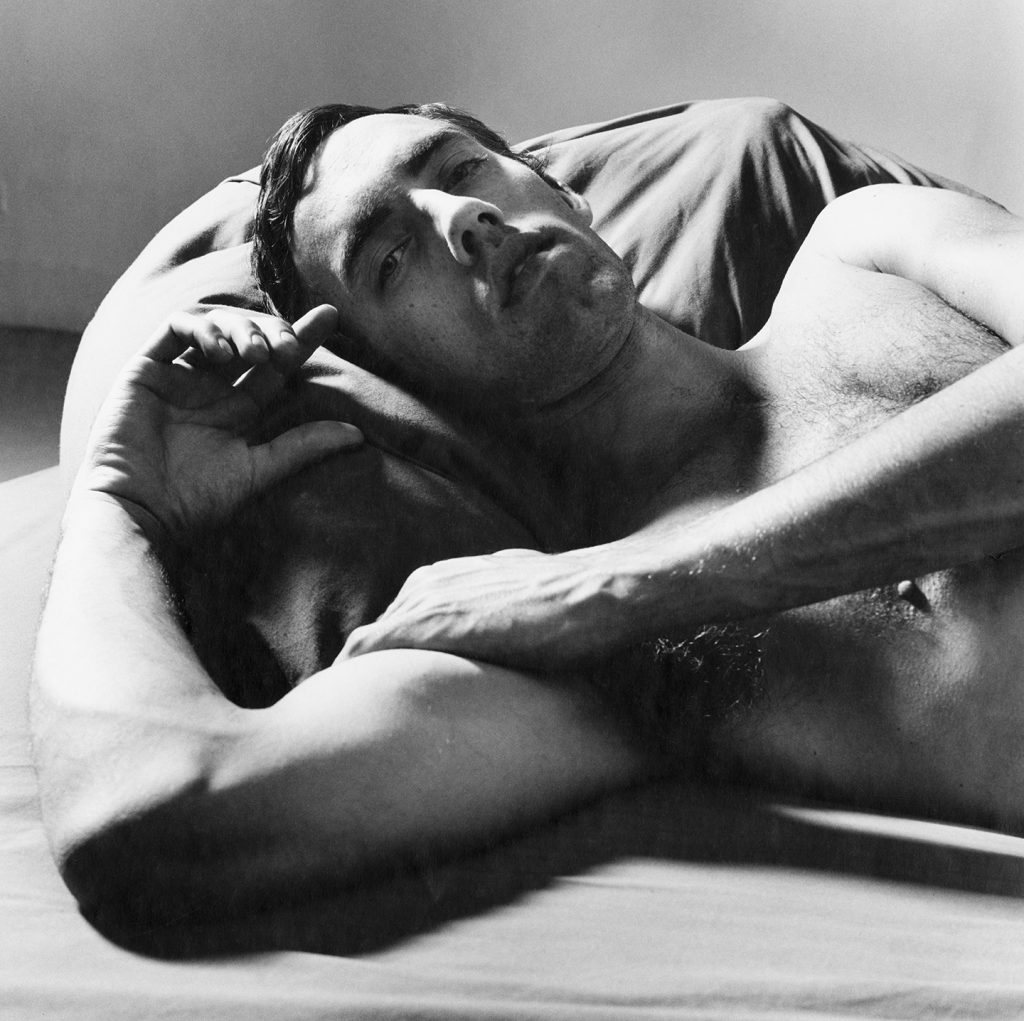
All the works included in the presentation are lifetime prints —made by the artist himself. Hujar, who was technically skilled in the darkroom, made multiple prints of the same image to arrive at his desired effect. The contrast between sharp tonalites and the gradations between them were manipulated by the artist to dramatic heights—as much part of the image as the composition and subject. His black-and-white photographs were often centered within the square frame, thus rendering all his subjects with classical dignity. As objects, the works are physical items of exquisite beauty; as images, they bring forth the decades of joy, pain, struggle, and ecstasy of the figures they depict.
Earlier this year, Hujar was the subject of Eyes Wide Open in the Dark, a landmark exhibition at London’s Raven Row, co-curated by Gary Schneider and John Douglas Millar, who is also writing a forthcoming biography of the artist. This October will see the London premiere of Peter Hujar’s Day, a film directed by Ira Sachs and based on the book of the same name by Hujar’s friend Linda Rosenkrantz.
Pace represents The Peter Hujar Archive alongside Maureen Paley Gallery, London; Fraenkel Gallery, San Francisco; and Mai 36 Galerie, Zurich.
Space
Featured Works
Peter Hujar, Georg Osterman Backstage at ‘Camille’, 1974, vintage gelatin silver print, 14-3/4″ × 14-3/4″ (37.5 cm × 37.5 cm), image 20″ × 16″ (50.8 cm × 40.6 cm), paper
Space
Peter Hujar, David Brintzenhofe Applying Makeup (II), 1982, vintage gelatin silver print, 14-5/8″ × 14-3/4″ (37.1 cm × 37.5 cm), image 19-7/8″ × 15-7/8″ (50.5 cm × 40.3 cm), paper
Now restaged in San Francisco, Peter Hujar’s last ever exhibition at New York’s Gracie Mansion Gallery in 1986 was a vision of a future he would never live to see
In January 1986, the year before Peter Hujar died from AIDS, he staged Recent Photographs at Gracie Mansion Gallery in New York. It was a vision of a future he would never live to see, a world where photography upended the boundaries of high and low art, becoming the lingua franca of global society. Now, the Fraenkel Gallery in San Francisco has opened Peter Hujar: The Gracie Mansion Show Revisited, just as Hujar imagined it.
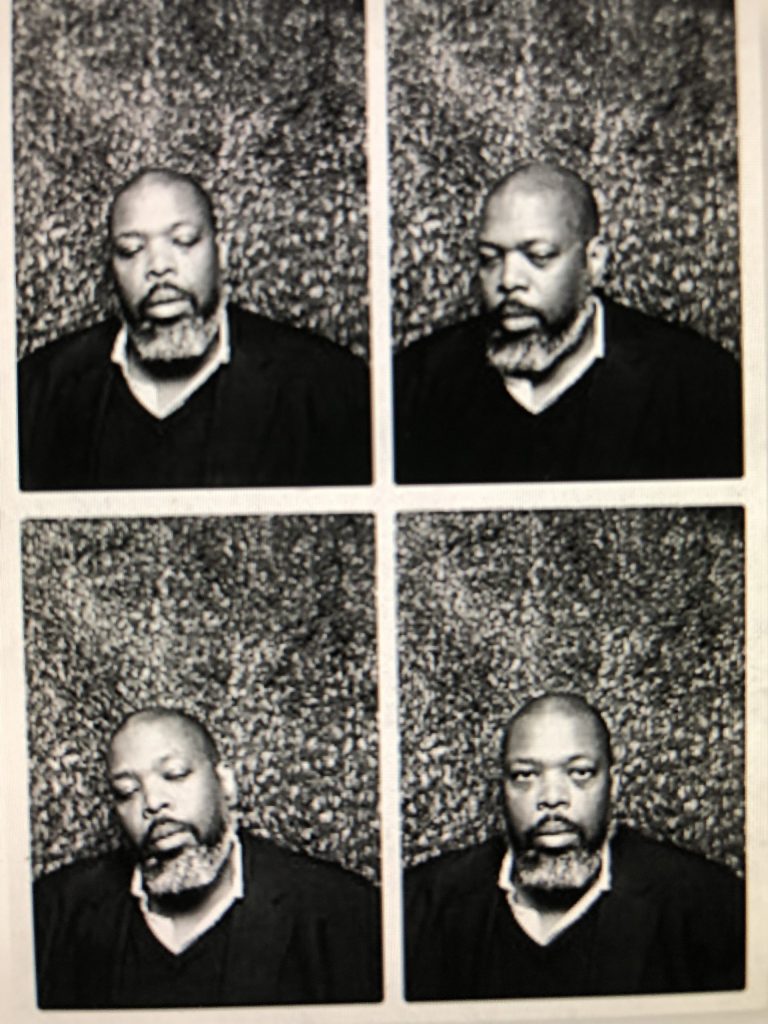
Envisioned as a mid-career survey comprising 70 meticulously crafted silver gelatin prints, Recent Photographs features Hujar’s signature portraits of friends and artists, tender nudes, raw landscapes, animals both dead and alive, and abandoned buildings hung in a grid two rows high. Evoking the pictorial paradise of his 1970s periodical, Newspaper, Hujar deftly wove images of fashion designer Charles James, drag performer Ethyl Eichelberger, Vogue editor Diana Vreeland, and jazz singer Peggy Lee into his sweeping vista of life, alongside portraits of Black men from his Mental Outpatient Series made in 1981, the year then-President Ronald Reagan deinstitutionalised state psychiatric hospitals, expelling patients into the streets to fend for themselves.
Hujar was an egalitarian, seeing beauty and truth as that which unites us in life and in death. He had arrived fully formed and had grown to become a creative force that existed beyond the trappings of commerce and careerism. Rather, he aligned himself with people of like mind, like his friend David Wojnarowicz, an artist who was then represented by artist and art dealer Gracie Mansion. “David came to me and asked if I would do a show for Peter. There was no hesitation. I was honoured,” says Mansion. “Peter had a strong presence. He carried himself with a power and a dynamic feel. You knew that he was a genius and he knew it too.”
Mansion embodied the ethos of the East Village avant garde, a world of artist-run galleries that worked as comrades and collaborators. She recognised the role of curation belonged to the exhibiting artist and created space for Hujar to bring his vision to life in the front room of the gallery. “It was impeccable,” Mansion remembers. “All day long, Peter was moving these pieces around. It was this dance. When it was done, I took the first walk through the exhibition and understood Peter in a different way. They’re all equal, and they’re all portraits.”
Nearly 40 years later, Hujar’s vision feels prescient, portending the endless digital scroll where seemingly disparate images suggest new connections. The Gracie Mansion Show Revisited stands as a testament to staying true to one’s inner vision for both the artist and gallery. “Peter Hujar didn’t really trust dealers; he didn’t like the way they represented his work and felt like they were ripping him off,” says artist and curator Sur Rodney (Sur), who was also co-director of the gallery. “People have asked if he was difficult because they heard he could be demanding, and we said, No, we gave him everything he wanted so he didn’t have anything to complain about.”
Sur sat in the Oak Room, a custom wood office with sliding glass doors and glass window panes, located in the front of the gallery. Hujar often joined him in this semi-private space, where he could relax and watch the scene outside of the spotlight. “I couldn’t tell you what we talked about, but I do remember Peter laughing a lot,” says Sur. “He wasn’t theatrical, dramatic, or overly expressive but he was great at telling a story. He always had a sense of being centred in himself, very comfortable talking to anyone. He was like that with animals, too; he’d have long conversations with animals in the field.”
Hujar installed his 1978 photograph, Cow, a lustrous, sloe-eyed bovine with a jaunty bit of hay draped from its lips, in the window of the gallery. It was, he told Sur, a self-portrait. Beyond the high cheekbones and streamlined physique, the artist and sitter seemed to share a moment of mutual recognition. Perhaps it was a throwback to his youth on his maternal Ukrainian grandparents’ farm in Ewing Township, New Jersey, where animals became his early friends and confidantes.
In total, Hujar would sell just two prints: a horse and a 1985 portrait of Andy Warhol superstar Jackie Curtis in his coffin, the latter to Fluxus artist Al Hansen, who had an exhibit in the gallery’s second room at the same time. “We sold tons of stuff from Al’s show, and he was somebody who didn’t care about money,” says Mansion. “Al always had a shopping bag in each hand and never knew where he was going to sleep. He probably couldn’t afford the full amount, so I told him to just pay Peter directly.”
This spirit of collectivism defined the East Village scene as it emerged as an artist-run antidote to the hypercapitalist New York art market – and captured the imagination of the media. Shortly before Recent Photographs opened, People magazine named Mansion and Sur as two of the “24 Most Intriguing People of 1985,” placing them between Madonna and Rock Hudson. But it was never about fame or money. “We were all doing it ourselves, and our only concern was being able to pay the rent,” Mansion says. “It was a community. We were artists, and these were our friends.”
As an exhibition of his most famous and arresting photographs opens in New York, we delve into the life and times of the American provocateur whose work continues to resonate
David Wojnarowicz , Arthur Rimbaud in New York (kissing), 1978-79. Silver print. Copyright Estate of David Wojnarowicz. Courtesy of the Estate of David Wojnarowicz and P·P·O·W, New York
There’s a spark to the art of David Wojnarowicz, the prolific visual artist, writer and Aids activist. His work so often feels alive, with possibility, with danger, and sometimes with fear. Whether in one of his most famous images, in which a herd of buffalo are tumbling down a cliff, or street art murals like The Missing Children Show (1985), where an exploding house is flanked by a viewfinder that stares down a series of cadavers, with Earth lingering above in orbit, an uncaring sentinel.
Now, the Leslie-Lohman Museum of Art is preparing to exhibit a series of Wojnarowicz’s most iconic images, Arthur Rimbaud in New York (1990), in which the artist and a collection of friends were photographed throughout New York, wearing masks of the French poet’s face. This comes alongside a new publication edited by the exhibition’s curator, Antonio Sergio Bessa, with new writing on Wojnarowicz alongside Rimbaud in New York. Rimbaud captures the core of Wojnarowicz’s artistic process: a sense of collaboration and artistic community; a formal inventiveness, where the artist does a lot with a little; and a keen, politically-charged eye, which here casts itself over the transformations of New York and the artist’s own childhood.
Wojnarowicz’s art drew on the narratives of his own life, the political landscape in which he found himself, and the artistic community of which he was a part. With a lo-fi, punk aesthetic and a refusal to look away from the world around him, his art continues to galvanise, challenge, and frighten in equal measure, even decades after his death.
A IS FOR AMERICA
Despite his travels to Europe – even going to Paris with the intent of living there in 1978 – America is inescapable in the art of David Wojnarowicz. Whether railing against the politics of his time, or creating imagery that challenged images and ideas of Americana, Wojnarowicz’s art is constantly grappling with the contradictions and violence of life and death in the United States
B IS FOR BUFFALOS
If there’s an image by Wojnarowicz that you recognise, even if you think you know nothing about the artist, then it’s Untitled (Buffalos) (1988-89). It’s been used on the cover of the U2 single “One”, and as a poster for Ari Aster’s film Eddington (2025). Wojnarowicz’s original image comes from a diorama in the Smithsonian of buffalo being herded off a cliff, plummeting to their death (a native American hunting method). Taken in the years following the artist’s Aids diagnosis, it becomes a critique of his country’s mistreatment of those who contracted the disease.
C IS FOR CINEMA OF TRANSGRESSION
Wojnarowicz was a constant collaborator, creating work alongside other artists in the East Village avant-garde; people like Peter Hujar, Nan Goldin, and Kikki Smith. He appeared in films by Richard Kern and directed alongside Tommy Turner, his creative impulses always searching for new outlets. And so it’s no wonder that he would also find himself involved in the Cinema of Transgression: low-budget, experimental films designed to shock.
D IS FOR DEATH
The spectre of death looms large in Wojnarowicz’s work. His buffalo are frozen on an inevitable descent to the grave; some of his most famous, unsettling images are of friends in their final moments, and in a comic book project he worked on with the artist James Romberger, sex and death are intertwined as two bodies together create a bizarre, violent moment of flesh coming apart. Death was everywhere in Wojnarowicz’s life, and would serve as a major catalyst in his work. Yet whenever he looks at death, he always seems to be daring it to look back at him….
By Tony Bravo published 5 October 2025 in San Francisco Chronicle
Ben Whishaw in “Peter Hujar’s Day,” directed by Ira Sachs, is set to play at the Mill Valley Film Festival on Friday-Saturday, Oct. 10-11. Janus Films
Peter Hujar’s photographs are haunting, glamorous, gorgeously grotesque, emotionally devastating and above all, honest.
Now, Bay Area audiences have a unique opportunity to immerse themselves in the world of this under-sung master of 20th century photography.
With “Peter Hujar: The Gracie Mansion Show Revisited,” the Fraenkel Gallery in San Francisco is recreating a now-legendary 1986 show in New York’s East Village presented by gallerist Gracie Mansion. The 70 photographs include portraits of friends, artists and dogs; nudes; landscapes; scenes of decaying abandoned buildings; and images of animals, living and dead.
“What became obvious to me, living with this show, was that everything was a portrait,” Mansion said in a discussion about the work for Fraenkel Gallery, highlighting how Hujar brought that point of view even to inanimate objects and scenes.
The Fraenkel presentation reproduces the original exhibition layout and even includes some prints from the 1986 show.
“Greer Lankton in a Fashion Pose” (1983) by Peter Hujar. Peter Hujar Archive, Artists Rights Society, N.Y.
Hujar died a year after that exhibition, on Nov. 26, 1987, of complications from the AIDS virus that was devastating the queer and artistic communities. He was 53 years old.
In a perfect bit of synchronicity, on Friday-Saturday, Oct. 10-11, the Mill Valley Film Festival is screening the new film “Peter Hujar’s Day” written and directed by Ira Sachs. It stars Ben Whishaw as the photographer and Rebecca Hall as writer Linda Rosenkranz, Hujar’s oldest friend.
The film is based on Rosenkranz’s book of the same name, in which she interviewed Hujar solely about what he had done the previous day, Dec. 18, 1974. In the course of the film, Hujar recounts both the extraordinary and the mundane, from photographing poet Allen Ginsberg to daydreaming about the man ahead of him in line at a Chinese restaurant.
When I met Hujar’s friend and executor Stephen Koch at the Fraenkel Gallery show opening, he said that Whishaw absolutely captured Hujar’s voice in his performance. Watching the movie, one has the sense that the actor was both channeling the real Hujar and also giving such an idiosyncratic, specific performance with each gesture that he was creating something as artistically original as the photographer’s own work. You get the same feeling from the film — Hujar’s great, candid gossip, asides and his recall of details — as you do the book.
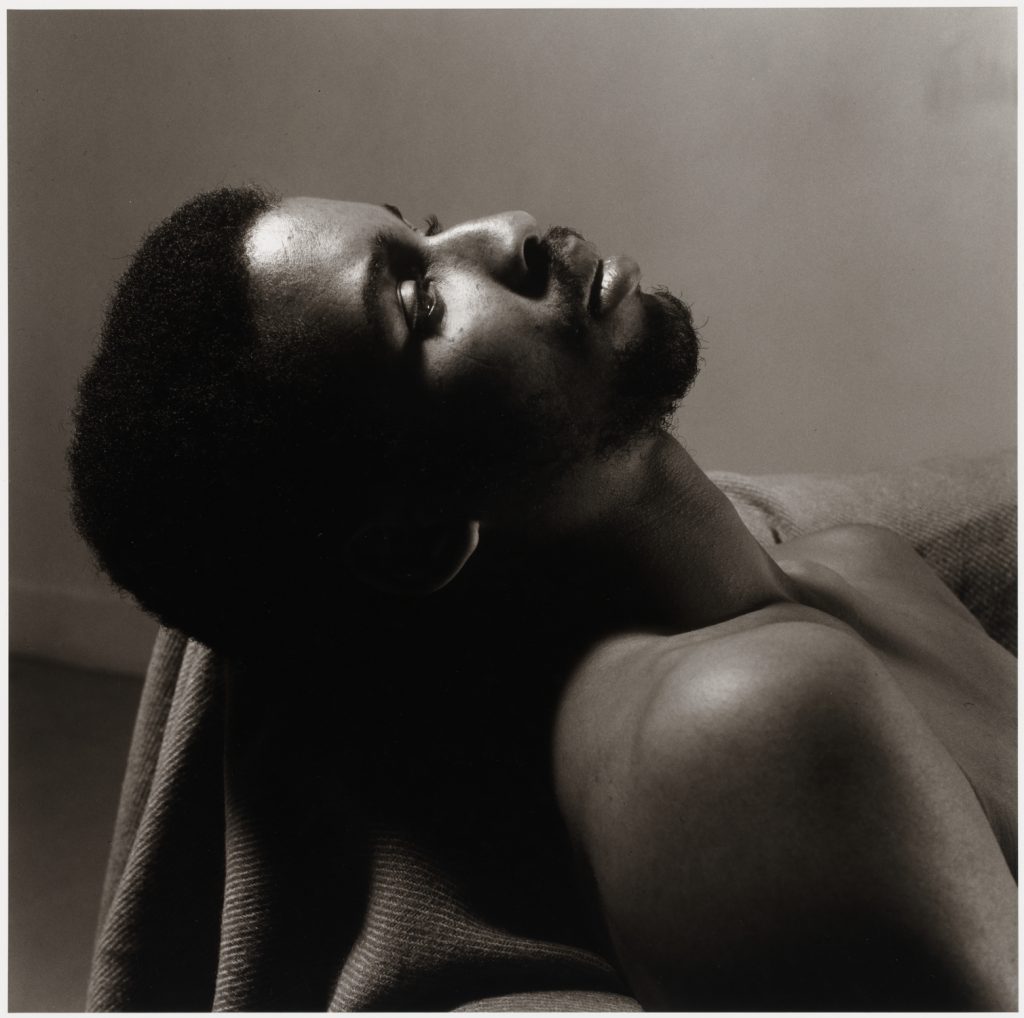
…The work on view at Fraenkel Gallery through Oct. 25 feels as intimate as “Peter Hujar’s Day” book and film, with the curation mixing images of life and death. “David Wojnarowicz: Manhattan-Night (III)” (1985) shows the artist who was also Hujar’s lover and friend in close up, his full lips sensual, every freckle on his face realized. Hujar’s portrait of his acquaintance Bob Berg (1985) shows his mastery of lighting and shadow, a skill likely honed in a 1967 master class he took with photographers Richard Avedon and Marvin Israel. I’m obsessed with the definition of Berg’s curls in the photo and the single light catching hair across his forehead.
“Bob Berg” (1985) by Peter Hujar. Peter Hujar Archive, Artists Rights Society, N.Y.
…But it is the deterioration shown in the abandoned rooms and buildings as well as dead animal photos that give the work bite. There’s a sense of inevitable finality in many of these photos, particularly “Jackie Curtis Is Dead” (1985), which shows the Warhol star laid out in an open casket.
These works, and the new film, are poignant reminders that Hujar was an artist taken too soon.
16 May 2025 – 25 January 2026 Hayward Gallery Touring, UK
A major group exhibition curated by one of the foremost painters working today
Lynette Yiadom-Boakye, To Improvise A Mountain (detail), 2024. Courtesy the artist
“The decisions are governed by something I can’t really put into words. I’ve selected things that I love by dint of their poetry, their beauty, their refusal, their internal logic and, above all, their power. Each artist here invents the language they need and there is magic in it.” – Lynette Yiadom-Boakye.
Hayward Gallery Touring presents To Improvise A Mountain, curated by Lynette Yiadom-Boakye. Bringing together artists that have been critical to her way of seeing and thinking, Yiadom-Boakye invites audiences on a personal journey through different geographies, generations of artists, and artworks that create their own emotional landscapes of intensity, intimacy, refusal, activism, and wonder.
Both an artist and a writer, Yiadom-Boakye is renowned for her oil paintings of imagined, enigmatic subjects. She says of her process: “My deployment of words in writing is not always so different to my use of brush marks in painting. The logic, patterns, relationships, repetitions and decisions are guided by intuition and a means of thinking through what is felt. That’s how I wanted to approach this show. And I wanted to bring together works by artists whose vision beguiles me: fellow poets, dreamers, thinkers and wanderers.”
Jennifer Packer, Procession, 2023. Oil and acrylic on canvas, 48.2 x 71.1 x 2.5 cm. Courtesy the Artist, Corvi-Mora, London and Sikkema Jenkins & Co, New York
Intuitive and guided by poetry’s dynamic ability to think through rhythm, image and feeling, the exhibition brings Yiadom-Boakye’s work into conversation with an eclectic range of historical and contemporary artists, illuminating her creative process.
Among the artists featured in this exhibition are Bas Jan Ader, Pierre Bonnard, Lisa Brice, Barbara Chase-Riboud, Samuel Fosso, Peter Hujar, Kahlil Joseph, Toyin Ojih Odutola, The Otolith Group, Jennifer Packer, Paul Mpagi Sepuya, Walter Sickert and David Wojnarowicz.
Sep 4–Oct 25, 2025 at Fraenkel Gallery, San Francisco
A new show recreates the artist’s groundbreaking 1986 exhibition
Lynn Davis, 1981
In Peter Hujar: The Gracie Mansion Show Revisited, Fraenkel Gallery recreates the now-legendary exhibition that took place in New York’s East Village in 1986, one year before the artist’s death. For the show, Gracie Mansion Gallery presented 70 photographs including portraits of friends and fellow artists, nudes, landscapes, and pictures of animals and abandoned buildings. Hung in a long grid two rows high, the exhibition freely mixed genres and subjects, creating a sequence that encouraged multiple associations. Fraenkel Gallery’s new exhibition presents a version of the original 1986 layout, offering contemporary viewers a chance to experience Hujar’s work as he conceived it. This will be Fraenkel Gallery’s sixth exhibition of Hujar’s work since 2002. The gallery will hold a public reception for the show and a concurrent exhibition Katy Grannan: Mad Riveron Saturday, September 13, from 2-4pm.
Cow, 1978
The 1986 exhibition, titled Peter Hujar: Recent Photographs, was the artist’s eighth and final solo show. Before his death, Hujar was recognized for his extraordinary photographs by a small but influential group in downtown New York that included avant-garde artists, writers, and performers, a circle that often overlapped with his portrait subjects. By the time of the show, his work had been featured in solo exhibitions in New York and Europe, and he had published one catalogue and his only book, Portraits in Life and Death. Gallerist Gracie Mansion organized the exhibition with Sur Rodney (Sur), at the suggestion of Hujar’s close friend, artist David Wojnarowicz. The gallery had included Hujar’s work in group shows, but Recent Photographs was his first solo exhibition since 1981. Following a difficult period, Hujar had perhaps hoped for sales as the market for photography began to grow, but very few photographs sold. While the show was not a commercial success, the opening reception drew an enthusiastic crowd, followed by an after-party in the Mike Todd Room at the Palladium nightclub.
“Looking back to his show, it drew so many of the New York luminaries,” recalls Mansion. “Peter was a star. The show was a triumph.”
David Wojnarowicz: Manhattan Night (III), 1981
Beyond its memorable opening night, the exhibition’s expansive approach and distinctive format provide valuable insight into the artist’s thinking about his work. Matted and hung inches apart, the photographs are sequenced so that images from the same genre rarely follow each other in any direction. A cow chews straw across from English actor David Warrilow, photographed nude. A portrait of Warhol superstar Jackie Curtis dead in a coffin abuts a New Jersey landscape and a drag queen showing off a tattooed thigh. Fashion editor Diana Vreeland sits next to a close-up showing the feet of Australian artist and dancer Vali Meyer and a trash pit in Queens. The arrangement highlights the individuality of every person, place, or animal, inviting the viewer to move in and out of the grid as connections between images grow and fade or shift. As Hujar once noted, “I photograph those who push themselves to any extreme. That’s what interests me, and people who cling to the freedom to be themselves.” Rather than comparing his subjects with each other, he was determined to see the singularity in each, an aim the exhibition supports.
A PHOTO OF MACHADO BY PETER HUJAR “Peter didn’t like this photo of me, but it’s my favorite. It’s the best portrait he ever took of me (although I think I’m showing too much breast here). I just love the attitude, the cast shadow, the mood. It’s not very close-up—the distance makes me look a little more glamorous. I thrifted the outfit and wore it in productions for Ethyl Eichelberger.”
…
SOME HEARTS MIRACULOUSLY ENDURE. Agosto Machado—artist, activist, thespian, muse, historian, raconteur, and perennial fashion plate—is one of them.
Machado grew up an orphan in Manhattan’s Hell’s Kitchen neighborhood and spent much of his youth without a roof over his head and nary a dollar to his name. He and his fellow “street queens,” as they described themselves, sought one another out for comradeship and survival. In the late 1950s, he felt the pull of Greenwich Village, where bohemianism and unabashed queerness offered a refuge from the oppressiveness of straight life. A little later on, he became a linchpin of the downtown theater scene, working with and acting for some of off-off-off-Broadway’s crème de la crème, including playwright and Warholette Jackie Curtis, artist and filmmaker Jack Smith, Ellen Stewart of the La MaMa Experimental Theatre Club, dramatist and drag doyenne Ethyl Eichelberger, and John Vaccaro’s Playhouse of the Ridiculous…
Agosto Machado, Untitled (Snapshots), 2022, photographs, paper, pen, and pins on gator board, 80 × 36″.
… In the following pages, you will encounter only a tiny cross section of Machado’s enormous trove, which might be one of the most astonishing and eclectic portraits of an era (or eras) ever rendered. The centerpiece of this portfolio, Untitled (Snapshots), 2022, is a memorial work comprising pictures Machado took of his friends and fellow travelers throughout the years, and includes a list naming all those depicted, some of whom have been individually highlighted here with Machado’s stories about them. You also will be able to gaze upon a selection of objects from the artist’s cache, to a few of which have been appended Machado’s recollections of how he obtained them. To my mind, every item and photo you meet here functions like a little valentine—a heart-shaped thing that, miraculously, has endured. —Alex Jovanovich